Planning Your Greek Destination Wedding | The Logistics of Love
Planning a destination wedding in Greece is a dream, but we know the "how-to" and "how-much" can feel overwhelming. To keep your experience as unscripted and joyful as the photos themselves, I’ve gathered the top 10 questions I receive regarding the practical side of our journey together.
Your Honest Guide to Planning Part One | Logistics & Budget
"I believe your wedding day should feel like a poem, not a checklist. But to get to the poetry, we have to clear the paperwork."
How do I legally get married in Greece as a foreigner?
To have a legally binding civil ceremony, you’ll need to work with the local Town Hall (Dimos) of the island you’ve chosen. Most couples find the paperwork - Apostille stamps, Greek translations, and local filings, takes about 4–6 months to finalize.
Pro Tip
Many of my couples choose a "Symbolic Ceremony." They handle the legalities in their home country and save the emotional exchange of vows for the Greek sunset. It removes the bureaucratic stress and lets your day in Greece stay unscripted and purely about the moment.
What about Orthodox weddings?
A Greek Orthodox ceremony is a soulful, visually stunning experience. If you dream of a church wedding, keep in mind there are specific religious requirements (such as proof of baptism). I recommend discussing these early with your planner or the local priest.
What documents do US, UK, or Australian couples need?
For a legal civil ceremony, you generally need:
Valid Passports
Long-form Birth Certificates (with an Apostille stamp)
A Certificate of No Impediment (CNI) or Single Status Affidavit
Official Greek translations of all documents (done by the Greek Ministry of Foreign Affairs or an authorized lawyer).
How much does a destination wedding in Greece cost in 2026/2027?
Budgeting for a wedding is always a spectrum, but for a high-quality, mid-sized celebration (40–60 guests), couples in 2026 are typically investing between €25,000 and €50,000.
Recent data shows that for a comprehensive experience including a private venue, full-service catering, open bar, and premium photography, the "real-world" average sits around €30,000 – €40,000.
Note
These estimates are based on 2026/2027 market data from leading Greek wedding planners and regional hospitality benchmarks. Synthesizes current venue fees, VAT regulations, and industry standards to provide an honest look at the modern destination wedding landscape.
Why You Should Choose a Documentary Style for Your Wedding Abroad
Choosing a documentary wedding photographer for destination weddings is often the difference between spending your trip on a choreographed film set or enjoying the vacation of a lifetime. When you travel to an iconic locale -whether it’s the rolling hills of Naxos or a remote beach in Ios - the goal is to soak in the atmosphere with your guests, not to be tethered to a shot list of stiff, traditional poses. A specialist in photojournalistic wedding style for destination events excels at unobtrusive storytelling, allowing the natural rhythm of your celebration to unfold while they capture the "in-between" moments that truly define your journey. This approach ensures that your gallery reflects authentic destination wedding photography and the genuine emotions of your inner circle, rather than a series of forced smiles against a scenic backdrop.
Beyond the aesthetic appeal
The documentary style offers unparalleled logistical freedom. Because a travel-ready wedding photographer prioritizes candid destination wedding photography and environmental context, they are experts at navigating the unpredictable elements of travel, from shifting coastal light to the vibrant chaos of a local town square. You won't have to worry about losing hours of your reception to formal portraits; instead, you get to be present for every toast and sunset view. Investing in unposed wedding photos abroad means you are prioritizing a visual legacy that feels like a memory rather than a production. By choosing the best photographer for intimate weddings abroad, you ensure the "vibe" of your celebration in Greece is preserved in a way that feels timeless, raw, and uniquely yours.
How far in advance should we book vendors?
Greece is a top global destination, and the most coveted spots are finite. For the best venues and boutique hotels, I recommend aiming 12–18 months in advance. Unlike city weddings, island logistics are strictly limited by physical space—once a specific hotel block or sunset-view terrace is booked for your date, it is off the market for the season.
Pro Tip | Find your planner before your venue.
Many couples feel the urge to lock in a venue first, but I highly recommend finding your wedding planner as your very first step. A local planner can review venue contracts for hidden logistical traps, confirm if a location fits your guest count comfortably, and often suggest "hidden gem" estates that aren't even listed on major travel sites. Starting with a planner makes every subsequent booking … from the catering to the photography … seamless and stress-free.
Can you have a beach ceremony in Greece?
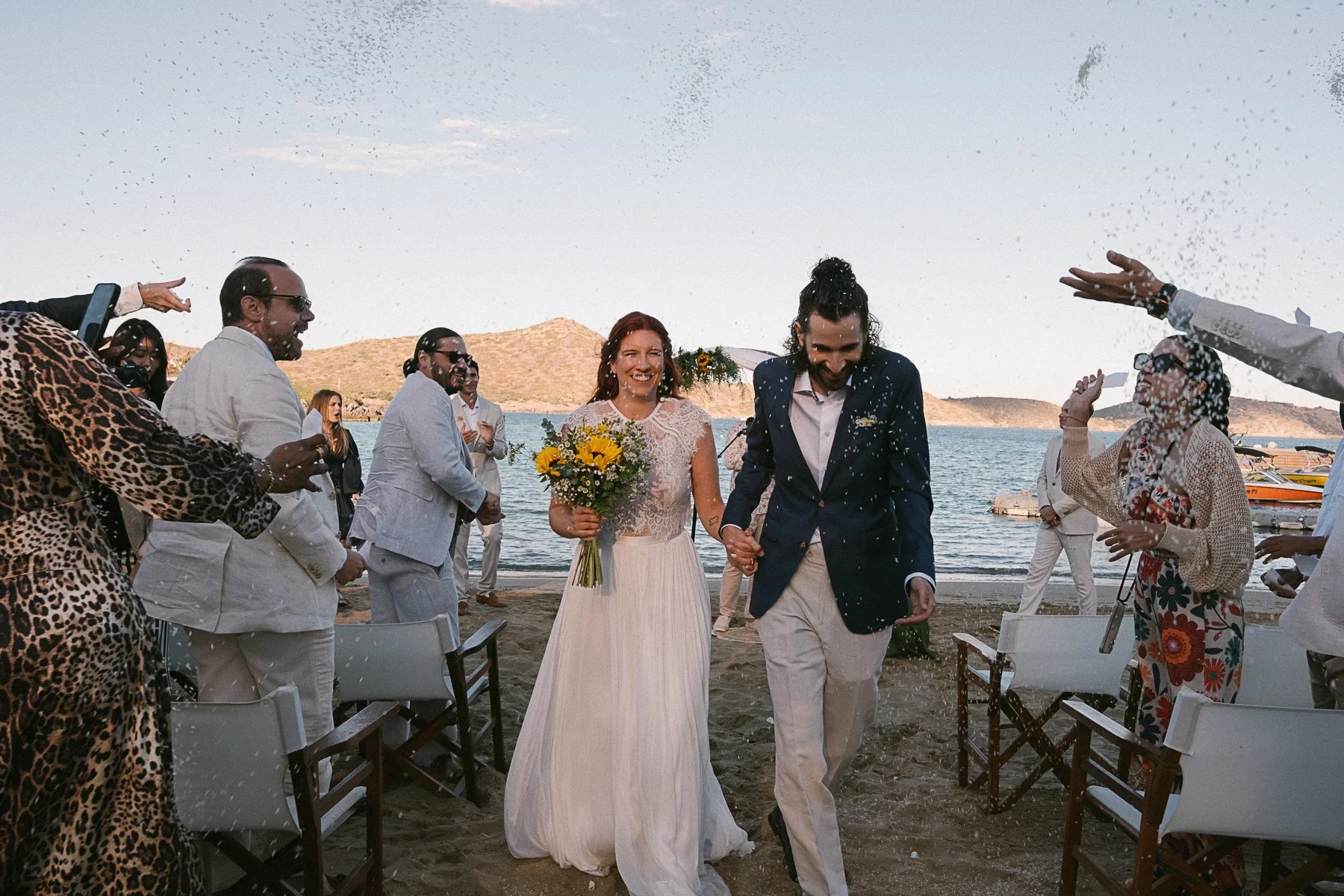
You can, but the reality is more nuanced than a simple "yes." While your planner can apply for a permit to use a public beach, Greek law ensures these spaces remain open to the public - meaning you cannot fully "close off" the sand from passersby.
The Symbolic Route (Highly Recommended)
About 90% of my international couples choose a Symbolic Ceremony for their beach wedding. Since it has no legal standing, you have zero paperwork stress and total creative freedom. You can write your own vows, choose any secluded cove, and focus entirely on the emotion of the moment without bureaucrats or required wording. You simply handle the "legal bit" at a courthouse in your home country.
The Civil Route (Possible but Heavy)
A legally binding civil ceremony on the sand is possible but complex. It requires:
Discretionary Permission: The local Town Hall (Dimos) must approve the specific outdoor location.
Paperwork Marathon: You’ll need Apostilled birth certificates, Certificates of No Impediment, and official Greek translations.
The Deadline: You must register the marriage at the local registry office within 40 days of the ceremony, or it may be deemed invalid.
Unless the legal date specifically matters to you, go symbolic. It saves you months of administrative hurdles and lets us focus on the art and soul of your celebration rather than the stamps on your documents.
How do we coordinate travel for our guests?
Think of yourself as the "Curator of the Experience." A dedicated wedding website is your most powerful tool. It’s where the "unscripted" beauty of your wedding begins, by removing the guesswork for your loved ones.
The Golden Rule of Greek Travel
The Aegean is vast, and logistics move at their own pace.
Ferry Wisdom | Remind your guests that ferry schedules for the summer are typically released in March. This is the "starting gun" for booking seats on high-speed vessels like SeaJets or Blue Star ferries.
The Digital Navigator | Encourage guests to use the FerryHopper app for real-time tracking and e-tickets.
The "Welcome" Pack | Include a digital map on your site with your favorite local tavernas and "secret" swimming spots. When your guests feel like insiders, they relax and relaxed guests make for the most authentic, joyful photos.
Beyond the permits and the guest lists lies the heartbeat of your wedding: the specific way the Aegean light catches a moment, the natural palette of the landscape, and the unscripted rhythm of the day itself. When we look past the logistics, we find the art.
As a photographer, I see your wedding as a living canvas where the location is a character in your story. Whether it’s the high-contrast shadows of a Cycladic alleyway or the soft, salt-misted air of a coastal dinner, every choice you make contributes to a visual masterpiece that should feel entirely like you. Let’s explore how to harmonize your personal style with the raw, honest beauty of the Greek islands to create a celebration that resonates long after the sun sets.
Which Greek islands best fit my visual style?
Choosing a location is much like an artist choosing a canvas; the texture of the land will dictate the "mood" of every photograph we create.
SANTORINI / The High-Contrast Masterpiece
Santorini is for those who embrace the dramatic. Visually, it is defined by its architectural geometry and sharp shadows. The stark white of the caldera against the deep volcanic earth creates a high-contrast environment that is incredibly striking for documentary photography. It suits couples who want their story told through bold lines and world-famous, fiery sunsets.
SIFNOS / The Minimalist Muse
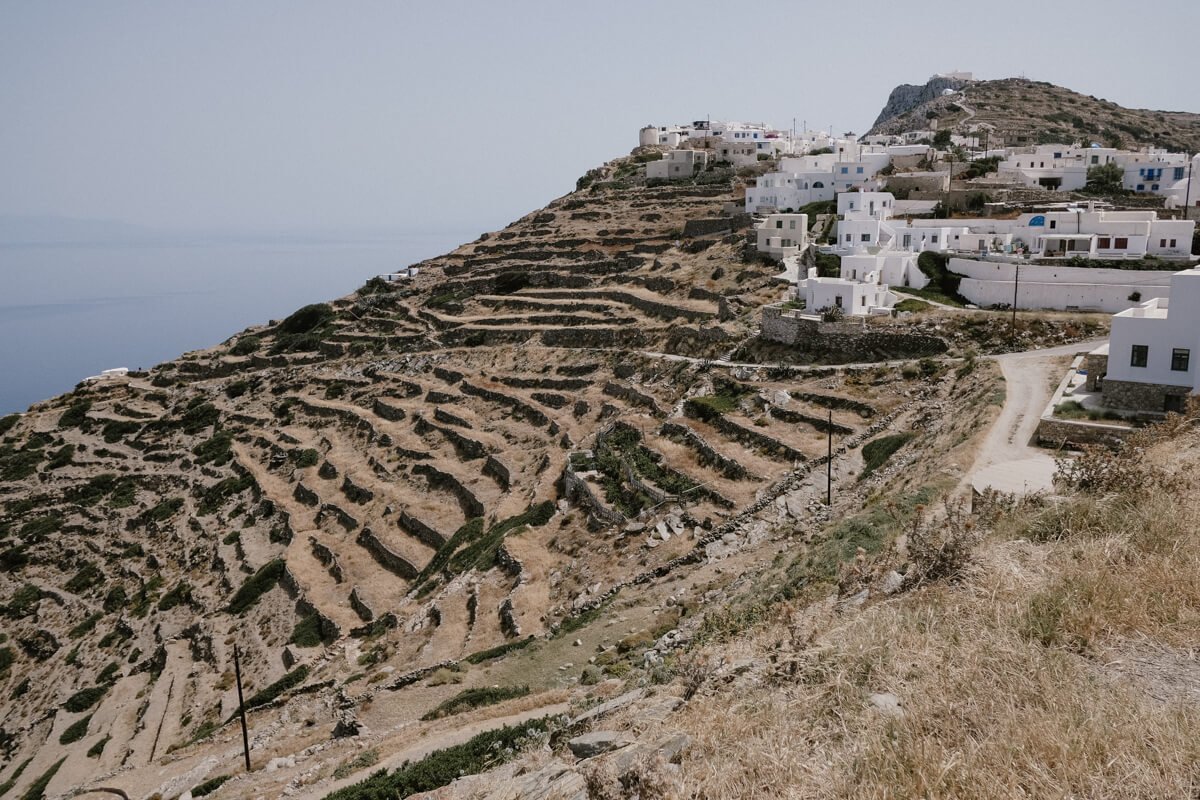
Sifnos is the epitome of "quiet luxury." Its beauty is found in its restraint—think sun-drenched monasteries, sophisticated pottery traditions, and a rhythmic, chic elegance. For the couple who prefers a minimalist aesthetic, Sifnos provides a clean, white-washed backdrop that allows the raw emotion of the day to take center stage without distraction.
Naxos / The Golden Soul
Naxos offers a warmth that is almost tactile. It is raw, authentic, and "golden", not just in its light, but in its vast sandy beaches and ancient marble ruins. It feels more bohemian and grounded. If your style is soulful and you want your wedding to feel like an unhurried, earth-bound celebration, the textures of Naxos are a perfect match.
While the world looks toward the blue domes of Oia, my heart often finds the most "honest" beauty in the quiet corners where the light isn't shared with a thousand tourists.
Antiparos / Understated Exclusivity
There is a reason Antiparos has become a sanctuary for those seeking privacy. It offers a relaxed, "barefoot luxury" feel. The light here is softer, and the atmosphere is one of intimate, celebrity-style seclusion—perfect for a wedding that feels like a private secret shared only with your closest circle.
Amorgos / The Cinematic Deep
As the setting for The Big Blue, Amorgos is inherently cinematic. It is rugged and vertical, with the Monastery of Hozoviotissa clinging to the cliffs like a pale jewel. It’s for the adventurous couple who wants a wedding gallery that feels like a film still—deep, moody, and profoundly moving.
Where are the best spots for those "Golden Hour" photos?
In Greece, light is our greatest gift, but it behaves differently depending on where you stand. While Santorini’s "big orange sun" is famous, the documentary photographer looks for light that feels intimate and painterly.
Coastal Chapels
My favorite spots for Golden Hour are the isolated, whitewashed chapels built right into the rocks. About an hour before the sun dips, these lime-coated walls act like a giant, natural reflector. They catch the honey-colored light and bounce it back onto your skin, creating a soft, radiant glow that no studio light could ever replicate.
The Dramatic Cliffs
If you are looking for an "editorial" edge, the rugged, wind-sculpted cliffs are unmatched. As the sun hits the stone, the textures become incredibly sharp and deep. It’s the perfect backdrop for a dress that moves in the wind, creating a high-contrast, cinematic look that feels both ancient and modern.
The Ethereal "Blue Hour"
(The Photographer’s Secret)
The 20 minutes after the sun disappears is often when the real magic happens. This is the "Blue Hour," where the Aegean turns a deep, velvety indigo and the sky feels like a watercolor painting in shades of violet and dusty pink. The light is perfectly even. There are no squinting eyes or harsh shadows. Everything becomes quiet. The heat of the day breaks, and the world feels still. In your photos, this translates to a serene, soulful quality that feels more like a private memory than a planned "photoshoot."
Can we include traditional Greek elements in a modern way?
Incorporating heritage into a modern wedding isn’t about following a rigid script; it’s about weaving your "soul" into the sensory experience of your day. You can honor the land you’re standing on by inviting a local duo of violin and lute to lead you through the narrow stone alleys to your ceremony .. a musical procession that feels both cinematic and deeply grounded. For a subtle, tactile touch, offer guests "Koufeta" (sugar-coated almonds) in minimalist, linen packaging as a nod to traditional Greek hospitality. These small, intentional elements create a bridge between your personal story and the timeless character of the islands, adding a layer of authenticity that feels effortless rather than performative.
What is the "Slow Wedding" trend?
The "Slow Wedding" movement is a soulful shift away from the frantic, hour-by-hour production of traditional events. In 2026 and 2027, couples are choosing to trade the stress of a 20-minute ceremony for an intentional, multi-day experience that breathes with the rhythm of the islands. This often looks like a three-day celebration: a barefoot welcome dinner by the sea to ground everyone, the wedding day itself, and a long, lazy brunch the following morning. By stretching the timeline, you remove the pressure to "perform" and instead create a space where real, unscripted moments have room to surface.
From a documentary perspective, this approach is where the most honest storytelling happens. When the schedule isn't rushed, photography becomes a natural extension of your day rather than a series of forced "appointments." We get to capture the quiet laughter during a pre-wedding swim, the slow transition of light across the dinner table, and the genuine connections between your favorite people. It’s about choosing presence over perfection, ensuring that when you look back at your gallery, you don't just see a beautiful event—you feel the calm, unhurried soul of the journey you shared.




WHY CHOOSE ME?
For me, photography is about feeling, honoring, and remembering. Each frame carries a piece of presence, a thread of connection, a story that will live long after the day has passed. This is the art I hold sacred: to witness love as it unfolds, and to preserve it in its truest, authentic form.
⸻ Let’s chat about your event*I respond personally to every inquiry. I’m based in Greece, but I travel wherever your story takes me. Let’s create something unforgettable.