

Navigating Your Greek Beach Wedding: The Ultimate Guide to Shoreline Romance
There is a specific kind of magic in a Greek beach wedding—the salt in the breeze, the rhythmic soundtrack of the Aegean, and the feeling of sand between your toes as you say "I Do." But planning an ethereal celebration on the coast requires more than just a beautiful view; it requires an understanding of the elements.
As a documentary photographer, I’ve seen how the Greek coastline can be both a stunning canvas and a logistical challenge. Here’s how to navigate your beach wedding journey with style and ease.
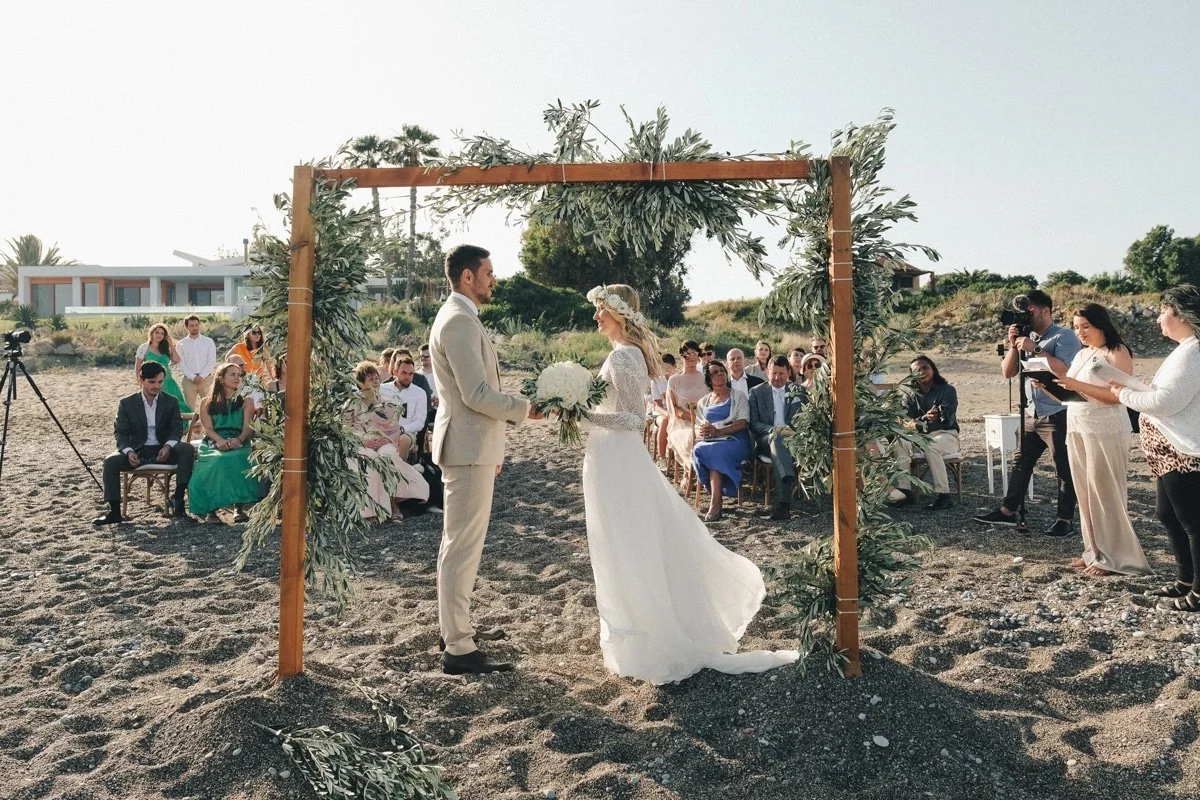
Why choose a Greek beach wedding?
1. Choosing the Right Coastline: From Volcanic Rocks to Golden Sands
Not all Greek beaches are created equal. Your choice of island will dictate the "vibe" of your photos:
Dramatic (Santorini & Milos): Volcanic red or black sands and white moon-like rocks. These provide a high-contrast, cinematic backdrop for documentary shots.
The Classic (Naxos & Ios): Endless golden dunes and shallow turquoise waters. Perfect for that "barefoot luxury" feeling.
Rugged (Crete & Mani): Pebble beaches and wild, rocky coves that offer a more raw, untamed aesthetic.
2. The Photographer’s Secret: It’s All About the Timing
The biggest mistake couples make with beach weddings is the timing.
The Noon Heat: Midday sun on a Greek beach is harsh, creating deep shadows under the eyes and making everyone squint.
The Golden Hour Solution: For those glowing, romantic portraits, your ceremony should start no earlier than 90 minutes before sunset. This ensures the light is soft, the temperature is bearable, and the sky turns into a pastel masterpiece just as you share your first kiss.
3. Logistics: Sand, Wind, and "Meltemia"
Dress Code: Encourage your guests to ditch the heels. A "Shoe Valet" (a basket for sandals) is a thoughtful touch. For the bride, flowy silks and lightweight laces are your best friends—they catch the wind beautifully in candid photos.
The Sound: The ocean is loud! If you have more than 20 guests, invest in a high-quality sound system so your vows aren't lost to the waves.
The Wind: The August "Meltemi" winds can be strong. Work with your florist to secure decor and choose a hairstyle that looks good even when "wind-swept"—the quintessential documentary look.
4. Greek Beach Traditions with a Twist
Incorporate local elements to make the day feel authentic:
The Arrival: Arriving at a beach chapel by a traditional Kaiki (wooden boat) is a quintessential Greek experience that creates incredible storytelling opportunities.
The Decor: Forget plastic and heavy drapes. Use olive branches, local driftwood, and sea-salted textiles that feel like they belong to the landscape.
5. Reception Under the Stars
Transition from the sand to a seaside tavern or a private beach club.
The Menu: Fresh seafood, grilled octopus, and chilled Assyrtiko wine.
Photography: As the party moves from day to night, my documentary style captures the transition from the serene ceremony to the wild, moonlit dancing on the shore.
Final Thoughts: Embrace the Elements
A beach wedding in Greece is a lesson in letting go. You can’t control the tide or the wind, but you can embrace them. When you stop worrying about your hair and start focusing on the person holding your hand, that’s when I capture the photos that will define your legacy.
[Explore Beach Wedding Venues] | [Inquire About Documentary Photography]
